
Rigid Box vs Folding Carton: Which Should You Choose?
A rigid box buys unboxing experience and structural strength; a folding carton buys lower unit cost and flat shipping volume
This page is a decision guide for buyers, not a pitch for rigid boxes. Zhengyang manufactures both structures in Dongguan: rigid boxes formed from 800–1500 gsm greyboard with 128–250 gsm printed wrap paper, and folding cartons die-cut from a single printed sheet. Both run at MOQ 500 pcs per design, samples in 3–8 working days, with the same ΔE≤2 colour standard and ±0.5 mm die-cutting tolerance.
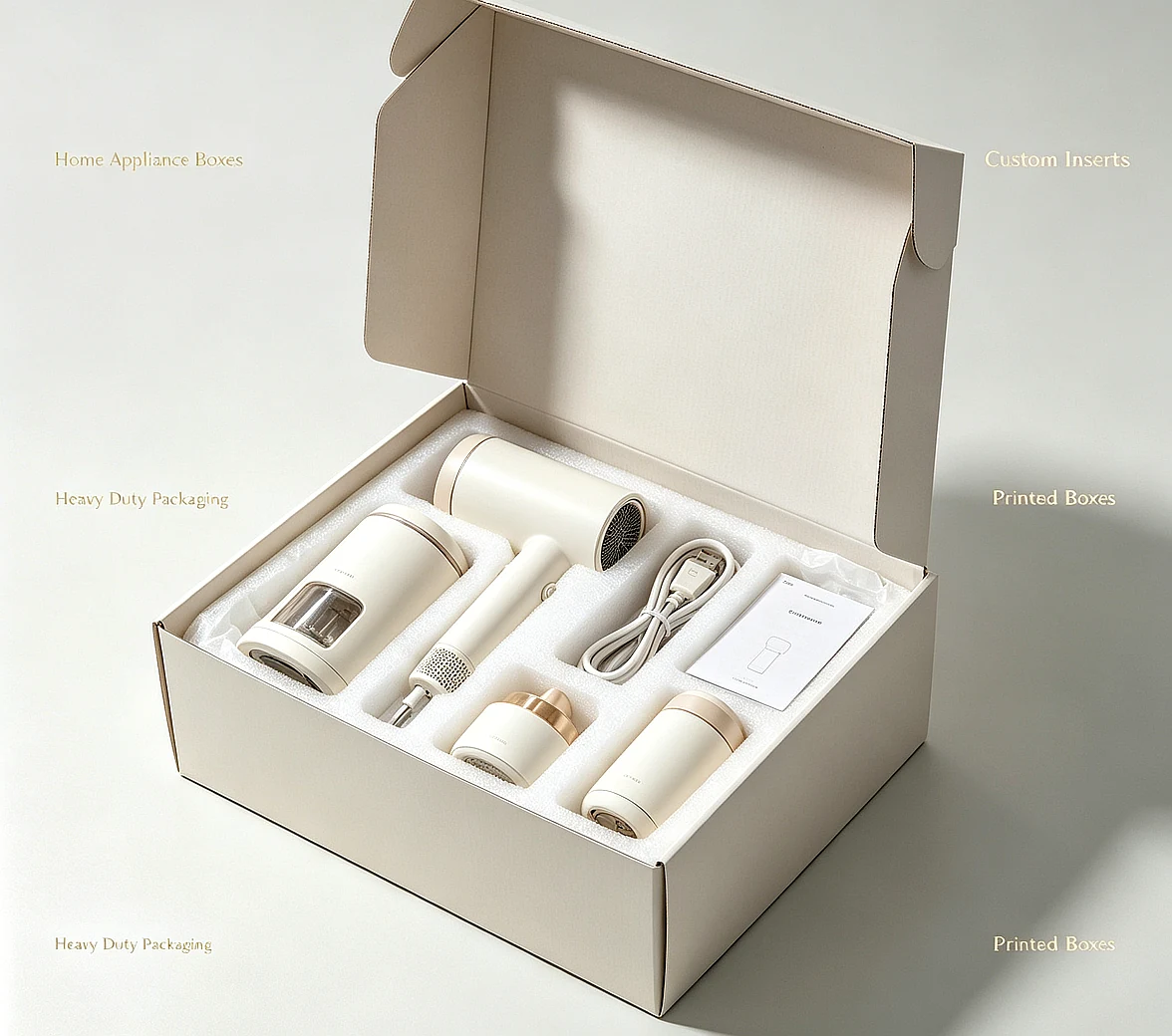
What We Build in Each Structure

Rigid Box Structures & Inserts
Magnetic flip lid, two-piece lid-and-base, flip lid with handle and drawer styles, with velvet, satin, flocked foam, EPE/EVA, PE, high-density foam, PET/PVC blister or paperboard inserts.
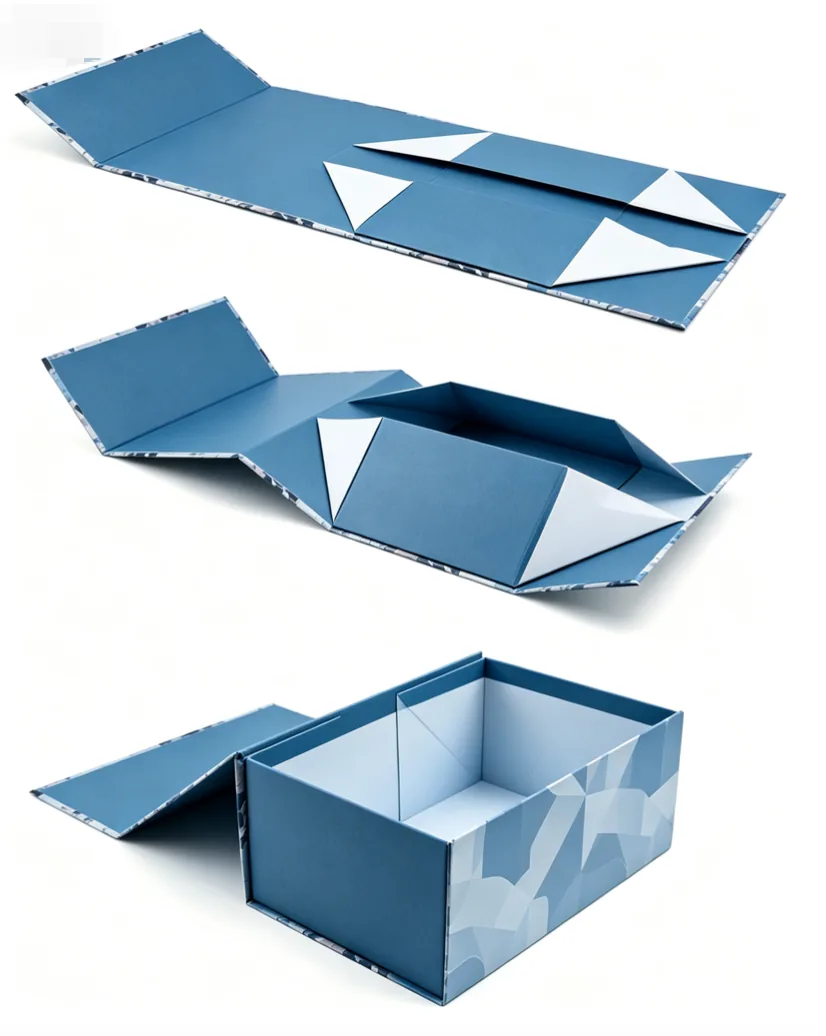
Folding Carton Structures & Dies
One-piece folding cartons, auto-lock bottom boxes and mailer boxes die-cut from a single sheet and supplied flat, in art paper 128–250 gsm, kraft paper 100–250 gsm or ivory board 250–300 gsm.
Printing & Finishing
Heidelberg Speedmaster CD102 5-colour with coater, Komori multi-colour presses and CTP platemaking. Foil stamping, embossing, spot UV and lamination apply to either structure.

Export & DDP Delivery
FOB, CIF or DDP door-to-door to 30+ countries from a 5,000 m² facility in Dongguan, 40–50 km from Yantian and Shekou ports.
Four Differences That Actually Decide It
Shipping volume and storage cost
A rigid box ships formed and occupies its full volume for the whole journey; a folding carton ships flat. On a sea freight or warehouse calculation, that difference often outweighs the unit price gap.
Unboxing experience and brand perception
Rigid walls, real weight and a lid that holds open read as premium before any print is considered. A folding carton can look premium, but the structure itself stays light and functional.
Unit cost and minimum order
A rigid box uses 800–1500 gsm greyboard plus a laminated 128–250 gsm wrap paper and is formed by hand or semi-automatically, so the manual-labour share is high and structure complexity moves the unit price. A folding carton is die-cut from one sheet, so cost tracks board and print rather than assembly. MOQ is 500 pcs per design either way.
Range of available structures
Rigid: magnetic flip lid, two-piece lid-and-base, flip lid with handle, drawer/slide. Folding: one-piece carton, auto-lock bottom, mailer box. If the product needs a held-open lid or a sliding reveal, only the rigid family delivers it; if it needs flat packing and speed, the folding family does.
Both Structures Made Under One Roof in Dongguan
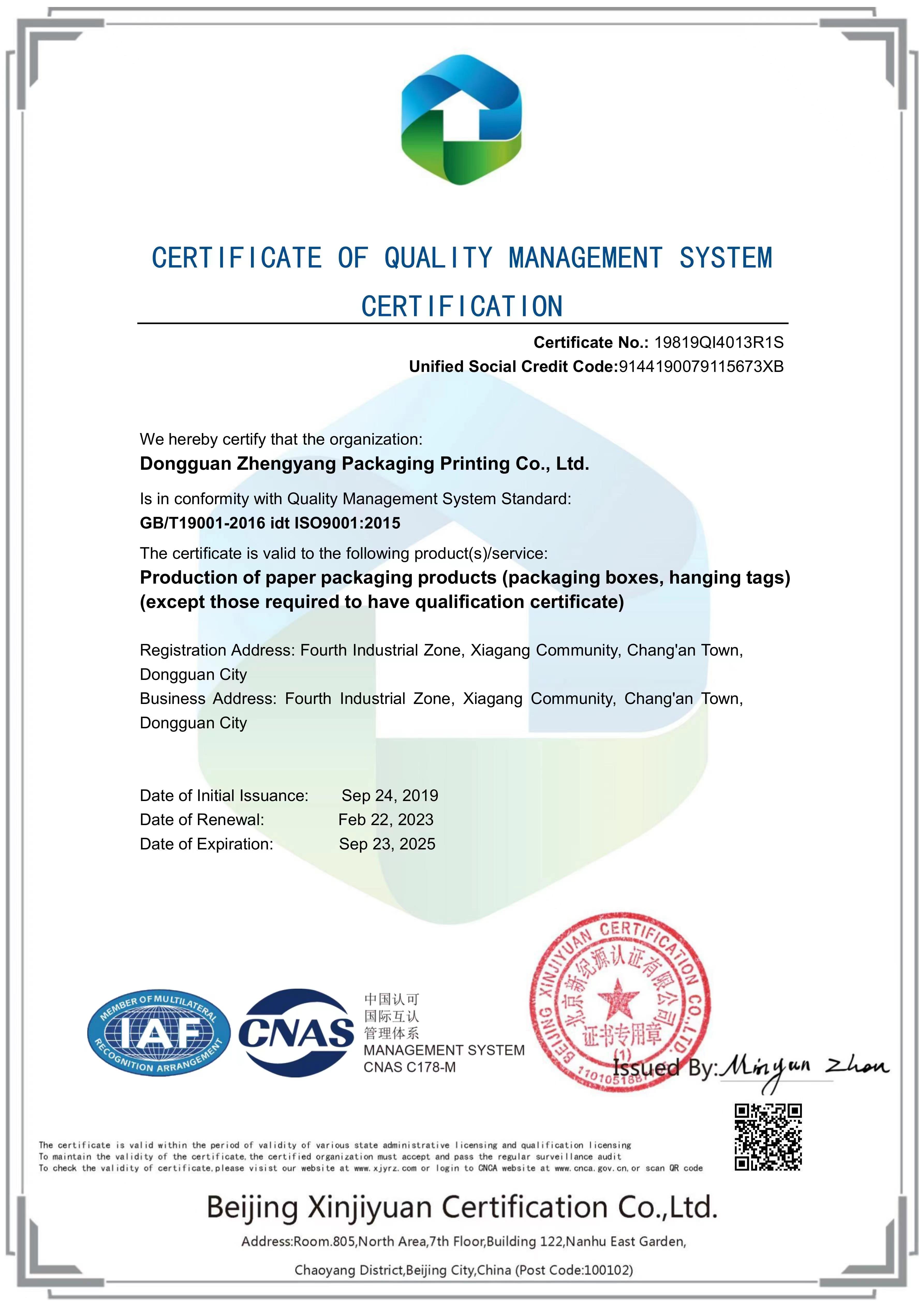
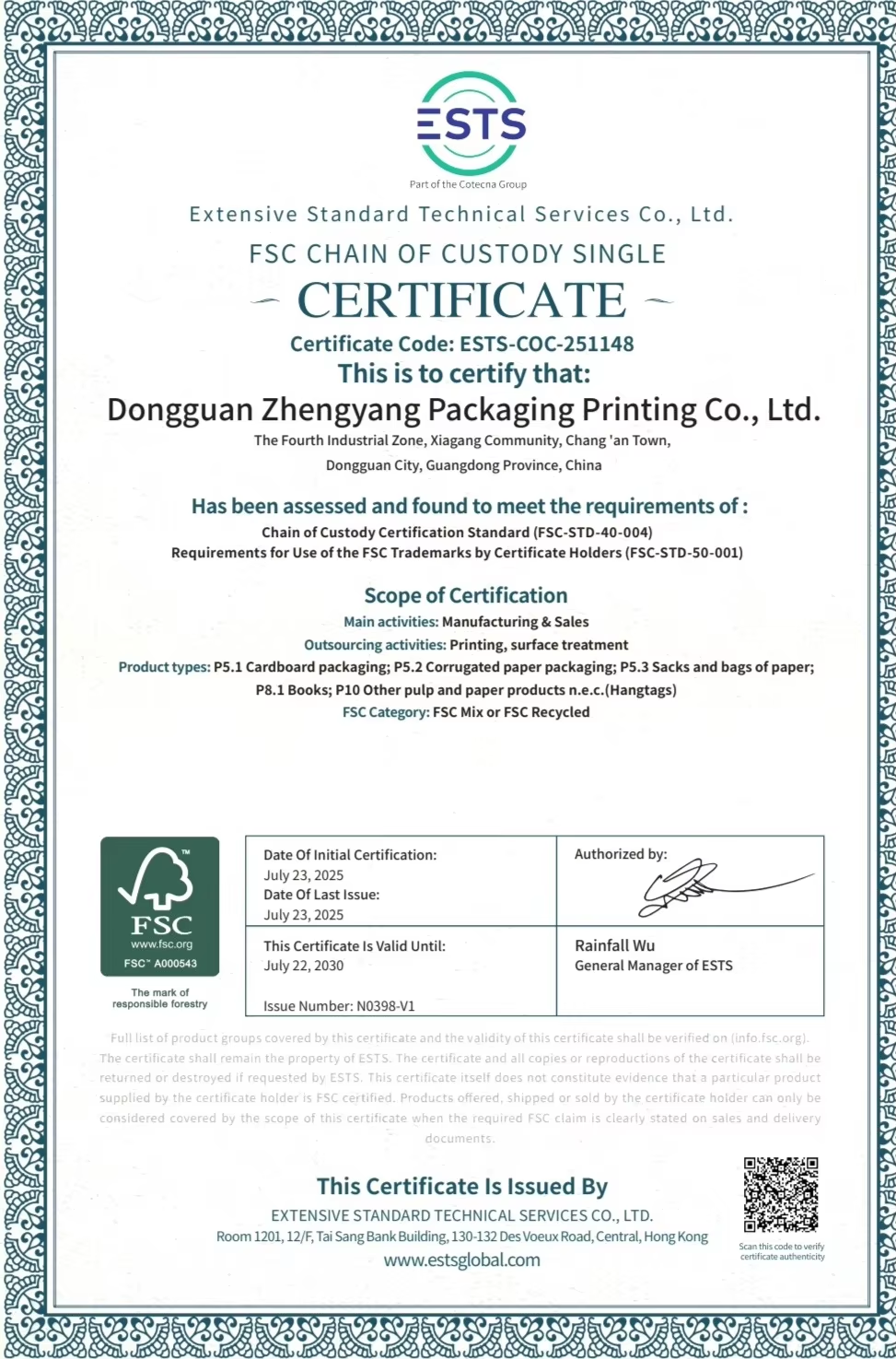
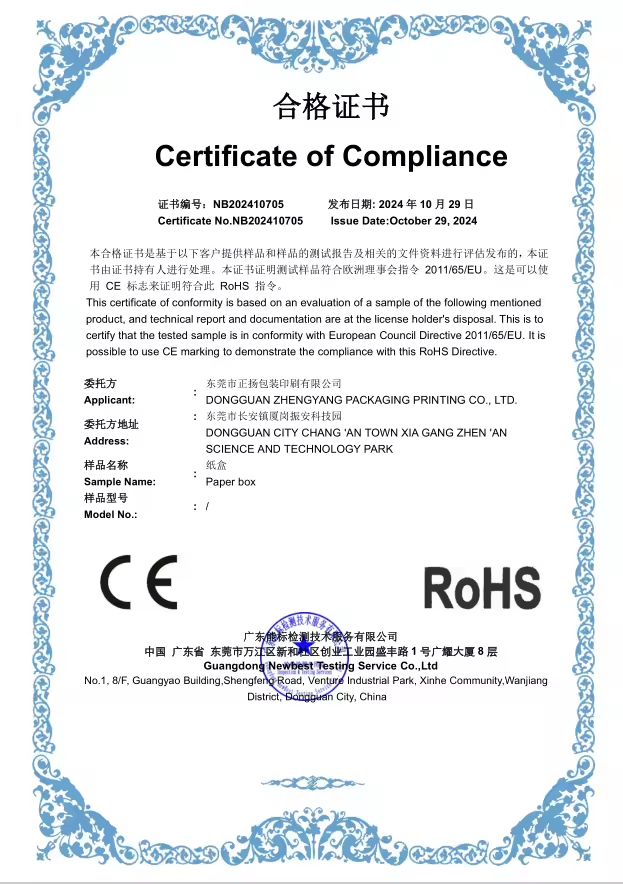
Because rigid boxes and folding cartons are produced in the same 5,000 m² facility, this comparison is not theoretical: one engineering team, one colour standard and one inspection system apply to both. Zhengyang holds ISO 9001:2015 (SGS), FSC CoC (FSC C018715 / ESTS-COC-251148), Sedex SMETA 4-Pillar, CE (No. NB202410705) and RoHS, with a TÜV Rheinland audit score of 4.9/5 in 2025.
Why a Single Comparison Table Will Point You the Wrong Way
Search for rigid box versus folding carton and most results reduce the decision to one axis: rigid is premium, folding is cheap. That framing is convenient, and it is also how buyers end up paying for structure nobody sees — or shipping a product in a carton that feels wrong in the customer's hands. The two structures are not a quality ladder. They are two different answers to two different sets of constraints.
Three questions decide it before any table becomes useful. First, what is the product's price point and where is it sold — a shelf in a retail store, a marketplace listing, a direct-to-consumer page? A box that has to hold its own next to competing products on a shelf is doing a different job from a box that arrives after a checkout. Second, does it ship directly to the end customer, and what is the return rate? Direct-shipped orders pay for every gram of volume, and a return pays for it twice. Third, does the pack need to be reopened repeatedly or displayed long-term? Jewelry, cosmetics and gift sets are often kept; a food or consumable carton is not. Answer those three and the structure usually chooses itself.
How a Structure Decision Becomes a Shipped Order
Requirements & structure advice
Send product dimensions, weight, sales channel and target quantity. We recommend rigid or folding based on the three questions above, then quote it as one itemised sheet.
Structure & die confirmation
Rigid: board weight, wrap paper, magnet or hinge detail, insert choice. Folding: dieline, auto-lock bottom or mailer construction. Both confirmed in writing before tooling starts.
Sampling
Physical samples in 3–8 working days — 3–5 days standard, up to 8 days with foil stamping, embossing or a custom insert. Production follows the sample you approve in writing.
Production
Run on Heidelberg Speedmaster CD102 5-colour with coater and Komori multi-colour presses, held to ΔE≤2 colour and ±0.5 mm die-cutting tolerance under IQC / IPQC / FQC.
Inspection & shipping
Finished-goods sampling to ISO 2859-1 general inspection level II, AQL 1.0 or 2.5, then dispatch on FOB, CIF or DDP door-to-door terms.
Rigid box vs folding carton, dimension by dimension
| Dimension | Rigid box | Folding carton |
|---|---|---|
| Base material | Greyboard 800–1500 gsm, formed and wrapped | Single-sheet paperboard: art paper 128–250 gsm, kraft 100–250 gsm, ivory board 250–300 gsm |
| Wrap paper | Printed wrap paper 128–250 gsm laminated over the greyboard | Not applicable — the printed sheet is the box |
| Forming method | Cut, wrapped, corner-turned and assembled by hand or semi-automatically | Die-cut from a single sheet, then machine folded and glued |
| Ships flat | No — ships formed and occupies full volume | Yes — ships flat, saving warehouse space and freight volume |
| Typical structures | Magnetic flip lid, two-piece lid-and-base, flip lid with handle, drawer/slide | One-piece folding carton, auto-lock bottom box, mailer box |
| Unboxing experience | Rigid walls, real weight and a lid that holds open | Light and functional; premium comes from print and finishing, not structure |
| Unit cost tendency | Higher — more board and a high share of manual labour | Lower at the same print quality — one sheet, machine formed |
| MOQ | 500 pcs per design | 500 pcs per design |
| Typical applications | Jewelry boxes, gift boxes, retail boxes, cosmetics boxes | Retail boxes, cosmetics boxes, food boxes (fast food, chocolate, snack and biscuit boxes) |
| Quality standard | ΔE≤2, ±0.5 mm die-cutting tolerance, MOQ 500 pcs, samples 3–8 working days | ΔE≤2, ±0.5 mm die-cutting tolerance, MOQ 500 pcs, samples 3–8 working days |
One Quality Standard Behind Both Structures
Rigid boxes and folding cartons are produced and inspected under the same certifications: ISO 9001:2015 (SGS), FSC CoC (FSC C018715 / ESTS-COC-251148), Sedex SMETA 4-Pillar, CE (No. NB202410705) and RoHS. TÜV Rheinland audit score 4.9/5 (2025).
Rigid Box vs Folding Carton: Buyer Questions
Does the 500 pcs minimum order apply to both structures?
Yes. MOQ is 500 pcs per design for rigid boxes and folding cartons alike. The number comes from set-up and forming time rather than from the structure type, which is also why it is quoted per design and not per order.
Why is a rigid box more expensive than a folding carton?
Three reasons: material, forming and volume. A rigid box uses 800–1500 gsm greyboard plus 128–250 gsm printed wrap paper, where a folding carton is one sheet. Rigid forming — wrapping, corner turning, magnet insertion, insert fitting — is done by hand or semi-automatically, so a large share of the cost is labour. And because rigid boxes ship formed rather than flat, they occupy far more freight and warehouse volume for the same number of pieces.
Can a folding carton still look premium?
Yes — print and finishing carry a folding carton a long way. Art paper 128–250 gsm and ivory board 250–300 gsm hold foil stamping, embossing, spot UV and matte or gloss lamination, kept within ΔE≤2 on our presses. What it cannot imitate is structural presence: weight, rigid walls and a lid that holds open are properties of the rigid construction, not of the ink.
Is there a lead-time difference between the two?
No meaningful one. Sampling is 3–8 working days for both — 3–5 days for a standard structure, up to 8 days when foil stamping, embossing or a custom insert is involved. Mass production is 7–15 working days for either structure after you approve the sample.
Can you deliver both structures on DDP terms?
Yes. Both ship FOB, CIF or DDP door-to-door to 30+ countries. The facility is in Dongguan, 40–50 km from Yantian and Shekou ports. DDP matters more for rigid boxes, because you are paying to move formed volume.
Send One Spec, Get a Structure Recommendation
Tell us the product, its price point and how it ships. We will recommend rigid, folding or a mix for the same range, and quote both with itemised tooling.