
Direct Factory vs Trading Company vs B2B Platform
Where your packaging actually gets printed — and what that changes for MOQ, sampling time, price layers and accountability
Most custom packaging quotes look similar on paper and behave very differently in practice. The variable is rarely the price per box; it is how many layers sit between your brief and the press. Zhengyang is a 5,000 m² printing and packaging factory in Dongguan: every quote, sample and production decision is made by the people who run the machines. Below is an honest comparison of sourcing from a factory directly, through a trading company, or through a B2B platform.
What Buying Direct Actually Covers
Structure & Dieline Engineering
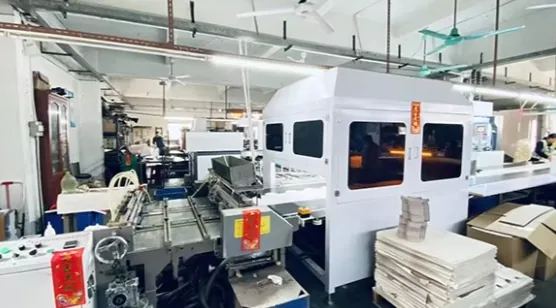
Dimensions, structural options and dieline files confirmed directly with the in-house engineering and design team.
Printing & Finishing
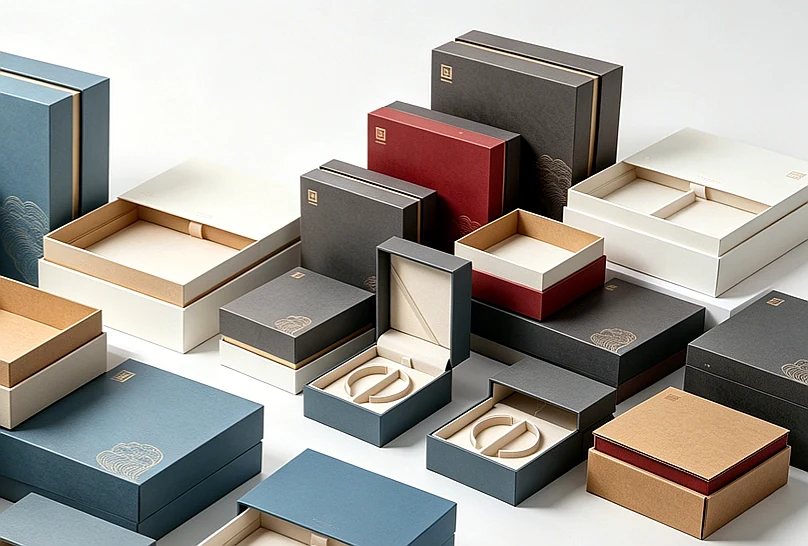
Foil stamping, spot UV, embossing and lamination run in the same building, so a change does not lose days in relay.
Materials & Inserts
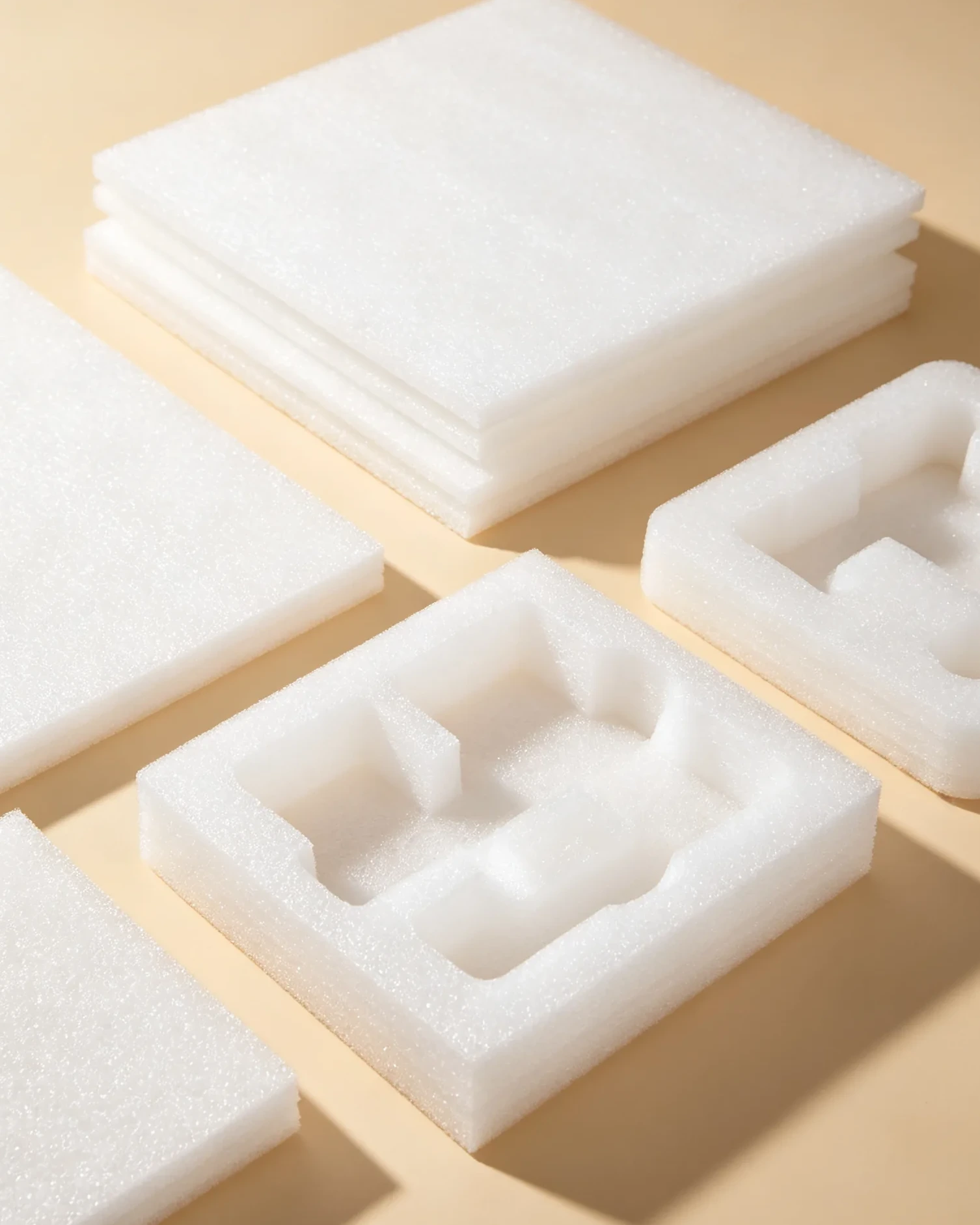
Surface papers, grey board and EVA/EPE inserts selected around your product structure, not around leftover stock.
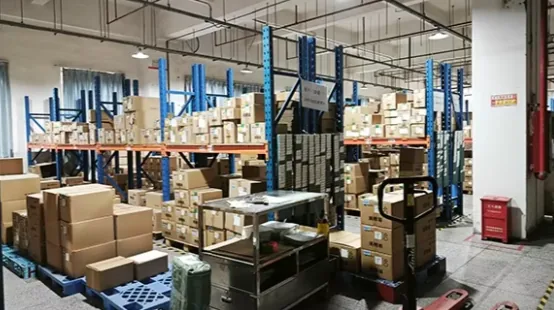
Export & DDP Delivery
In-house export team shipping to 30+ countries on FOB, CIF or DDP door-to-door, 40–50 km from Yantian and Shekou ports.
What Changes When You Talk to the Factory
Engineering changes reach the press the same day
When a structure or finish needs adjusting, you are talking to the people who set up the machine — not to a layer that has to relay the request and relay the answer back.
Sampling does not wait on a relay
Physical samples in 3–8 days, because sampling and mass production happen in one building. There is no handover to confirm before the sample can be made.
Price layers are visible
A quote from the factory stacks one margin on the production cost. Every additional intermediary layer stacks its own margin on that same production cost.
The facility you audit is the facility that prints
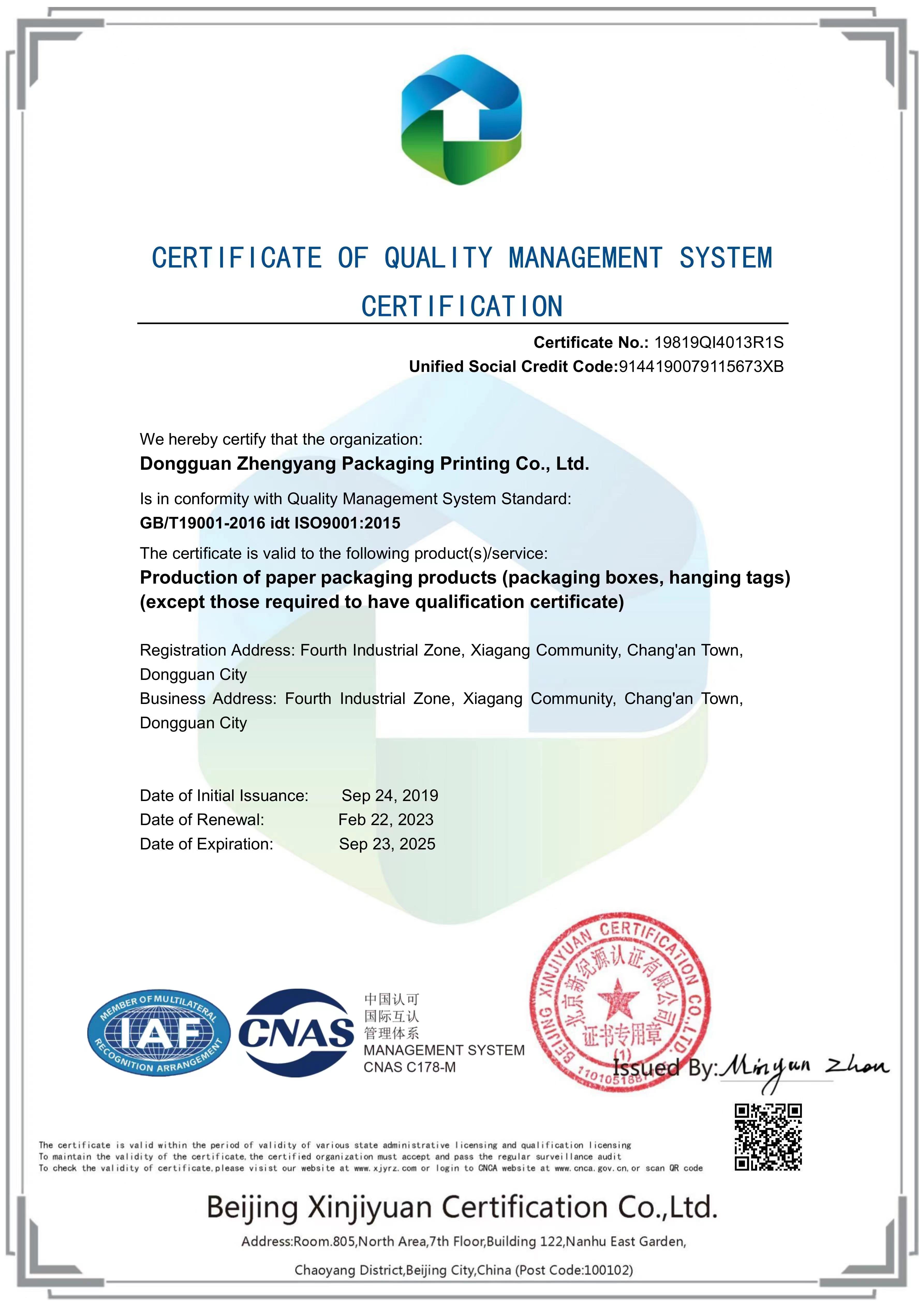
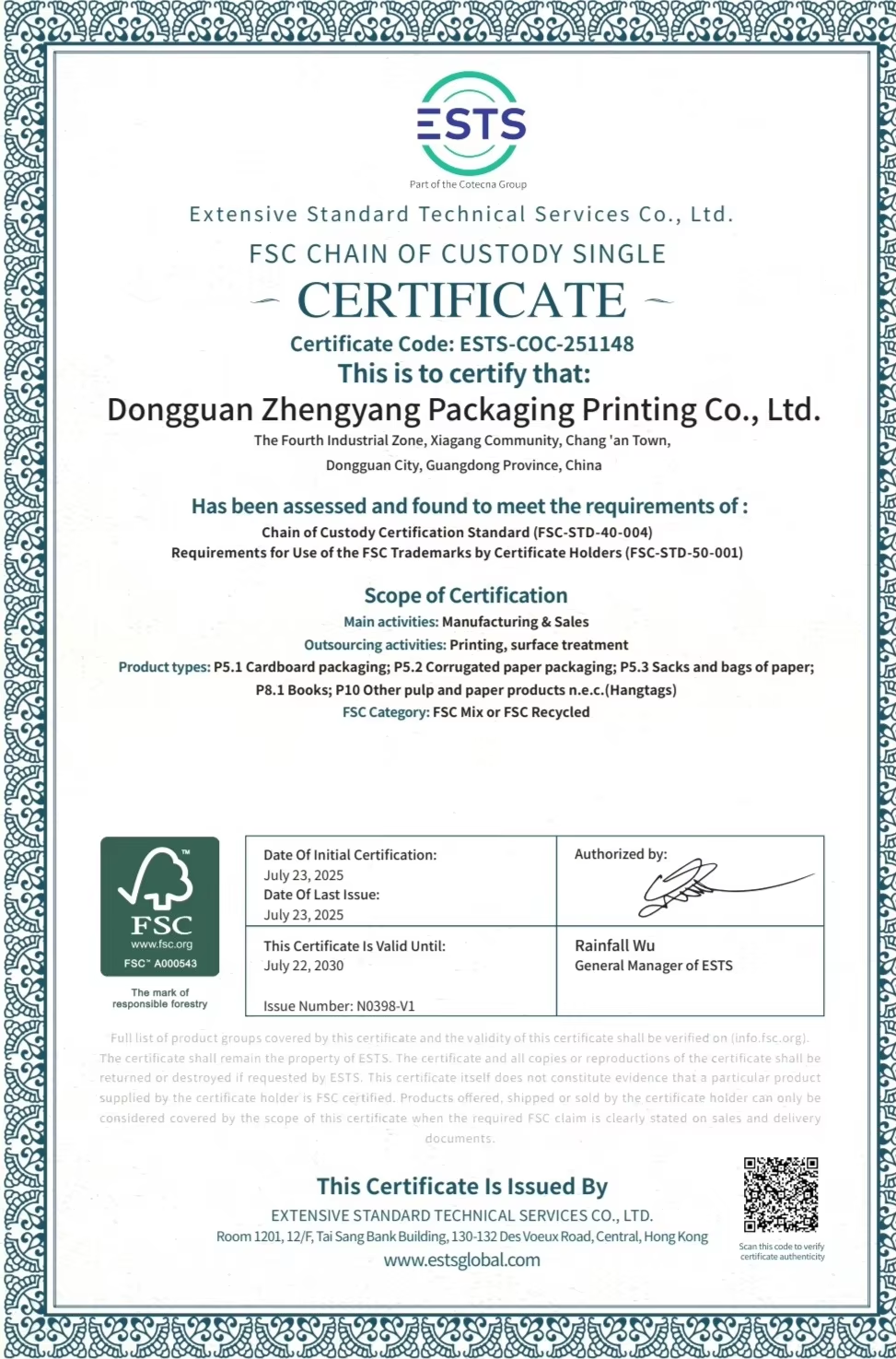
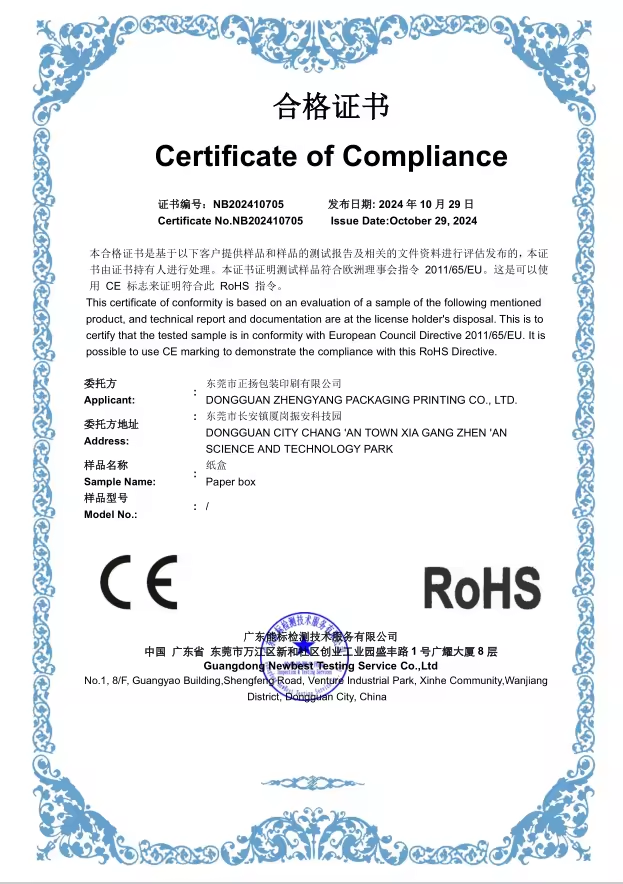
ISO 9001, FSC CoC, Sedex SMETA, CE and RoHS all sit under the same legal entity that quotes you. On-site and video factory audits are welcome.
Export capability under the same roof
Nothing changes hands between quote and shipment: our in-house export team handles customs and logistics on FOB, CIF and DDP door-to-door terms across the United States, Canada, the United Kingdom, France, Germany, Italy, Spain, the Netherlands, Belgium, Sweden, Poland, Mexico, Brazil, Japan, South Korea, Australia, New Zealand, Singapore, the UAE and more than 30 countries in total.
Why the gap shows up after the quote, not in it
Three suppliers can return almost identical unit prices while the three sourcing models behave completely differently once a project starts moving. The differences surface during sampling, artwork changes, exception handling and delivery — not on the quotation sheet.
A quote only reflects one frozen set of assumptions: this material, this finish, this quantity. Total cost is decided by what happens when those assumptions change, and by how quickly the production line can be re-set when they do.
When a trading company or platform is the better choice
If one purchase order has to cover a dozen product categories at once — printed boxes, plastic parts, hardware, textiles — an experienced trading company or platform genuinely reduces the number of counterparties you manage. That is its real value.
If volume is very large and specifications stay unchanged for years, the scale economics of a big factory can also win. This page does not argue that one model is always better: for a single packaging category with custom structure, fast iteration and audit rights, going direct removes the most friction. For cross-category consolidation, a middle layer earns its place.
How to tell whether you are buying from a factory
1) Ask for the business licence and check that its registered scope covers printing and packaging production, then check that the bank account name matches the licence. 2) Ask for a live video walkthrough of the press line, not a product gallery. 3) Ask for the factory address and look at it in satellite view. 4) Ask who signs the inspection report and see whether the answer points back to the same entity. 5) Ask whether third-party or client on-site audits are accepted.
Those five questions are usually enough. A trading company can answer some of them; it cannot answer all five consistently.
How a Factory-Direct Order Runs
Inquiry & feasibility review
Send size, material, finishing, quantity and target market. A formal quotation follows within 1–3 business days.
Sampling
Physical sample in 3–8 days. Mass production is executed strictly against the sample you confirm in writing.
Production
7–15 working days on a Heidelberg CD102 5-colour press, held to ΔE≤2 colour accuracy and ±0.5 mm dimensional tolerance.
Inspection & delivery
IQC / IPQC / FQC plus full size sampling before shipment, then FOB, CIF or DDP door-to-door dispatch.
Sourcing comparison: direct factory vs trading company vs B2B platform
| Decision factor | Direct factory (Zhengyang) | Trading company | B2B platform |
|---|---|---|---|
| Who writes the quote | The factory export team; the owner is reachable for exceptions | Sales staff who forward your brief and add their margin | Listing or account manager, often reselling a factory quote |
| Who owns the production schedule | The same facility that quotes you | A third-party factory you normally cannot see | An undisclosed factory behind the listing |
| Engineering changes | Discussed with the people who set up the press | Relayed; every round trip costs days | Relayed through an additional platform layer |
| Sampling | 3–8 days, in-house | Production time plus relay time | Production time plus platform handling |
| MOQ per design | 500 pcs | Usually set by the intermediary, not the press | Varies by listing, often set by the reseller |
| Price structure | Production cost plus one margin | Each layer adds its own margin to the same production cost | Platform fees and reseller margin stack on the same production cost |
| Tooling, plates and dies | Quoted as line items and shared across your repeat runs | Opaque breakdowns with intermediary markup | Rarely itemised at all |
| Certification and audit rights | ISO 9001, FSC CoC, Sedex SMETA, CE, RoHS — audits welcome | The selling entity may not be auditable | The printing facility is usually not disclosed |
| Accountability for defects | One party from artwork to delivery | Split between the seller and an unseen printer | Split across seller, platform and factory |
| Export and DDP | In-house export team, DDP to 30+ countries, 40–50 km to Yantian/Shekou | Depends on the factory they use; you also pay the layer | Depends on the seller; logistics is often outsourced |
Certifications Held by the Producing Entity
These certificates are issued to the same company that quotes, prints and ships your order.
Sourcing Questions Buyers Actually Ask
Is it cheaper to buy custom packaging directly from a factory?
For the same specification, a direct quote usually removes at least one margin from the same production cost, so the number tends to be lower — but "direct" is not the same as "cheapest". A factory that specialises in short runs with in-house tooling (500 pcs MOQ) often beats both a large plant that pushes a 500-pc order to the back of the queue and a reseller who needs a markup to survive. Compare total landed cost, not unit price alone.
Can a trading company get me a lower price than the factory?
Occasionally, in specific conditions: extremely large consolidated volumes, or specifications that have not changed for years and can be placed with whichever plant currently has idle capacity. Against that, you are usually trading away visibility — you may not know which factory prints your order or be able to audit it. Ask for the printer identity in writing before assuming the lower price is comparable.
How do I verify that a supplier is a real factory and not a trading company?
Five checks: (1) business licence scope covering printing and packaging production, with the payee name matching the licence; (2) a live video walkthrough of the press line rather than a product gallery; (3) a factory address you can inspect in satellite view; (4) a clear answer to "who signs the inspection report" that points back to the same entity; (5) confirmation that third-party or client on-site audits are accepted.
If I need many different product types, is a platform easier?
Yes, that is where a platform or trading company genuinely helps — consolidating dozens of unrelated categories into one counterparty. But packaging is not dozens of unrelated categories: boxes, bags, hang tags and cards are printed and finished by the same presses and the same people. Keeping packaging with one factory usually reduces both cost and coordination, while a platform remains useful for the non-packaging items in the same order.
Who is responsible if the packaging arrives with a defect?
In a direct factory order there is one accountable party from artwork to delivery: the entity that quoted, printed, inspected and shipped. Where a middle layer is involved, responsibility is split between the seller you paid and a printer you have no contract with, and resolution depends on how that relationship is documented. Our own terms set a 3–7 business day acceptance window with written claim evidence such as photos or video.
What are the real risks of sourcing directly from a factory in China?
The honest ones: you take on more project management yourself, there is no platform escrow cushioning payment risk, and quality depends on the specific factory rather than on a marketplace rating. These are manageable — confirm the legal entity, agree sampling and acceptance criteria in writing, keep deposits to the documented schedule, and use factory audits. The risks that are harder to manage are the ones you cannot see: an unknown printer, an undisclosed MOQ policy, or an accountability chain that dissolves when a claim appears.
Compare Us Against Your Current Supplier
Send us a packaging specification you already buy — dimensions, material, finishing and quantity. We will quote it factory-direct and show you where the layers were sitting.