
Custom Jewelry Display Cards, Printed and Die-Cut in Dongguan
350gsm board · Die-cut slots · Velvet or leather finish · MOQ 1,000 pcs
A jewelry display card is a printed paperboard card, usually 300–400gsm, with die-cut holes or slots that hold earrings, necklaces or rings for retail display or shipping. We print and die-cut that card: necklace and bracelet cards with drape slots, earring cards with paired holes, ring cards with tuck slots and fold-to-stand display cards. Board weight, slot geometry and finish are matched to how the card is used — on a retail peg, in a counter tray or inside a mailer. From 1,000 pieces per design.

Display Card Styles We Produce
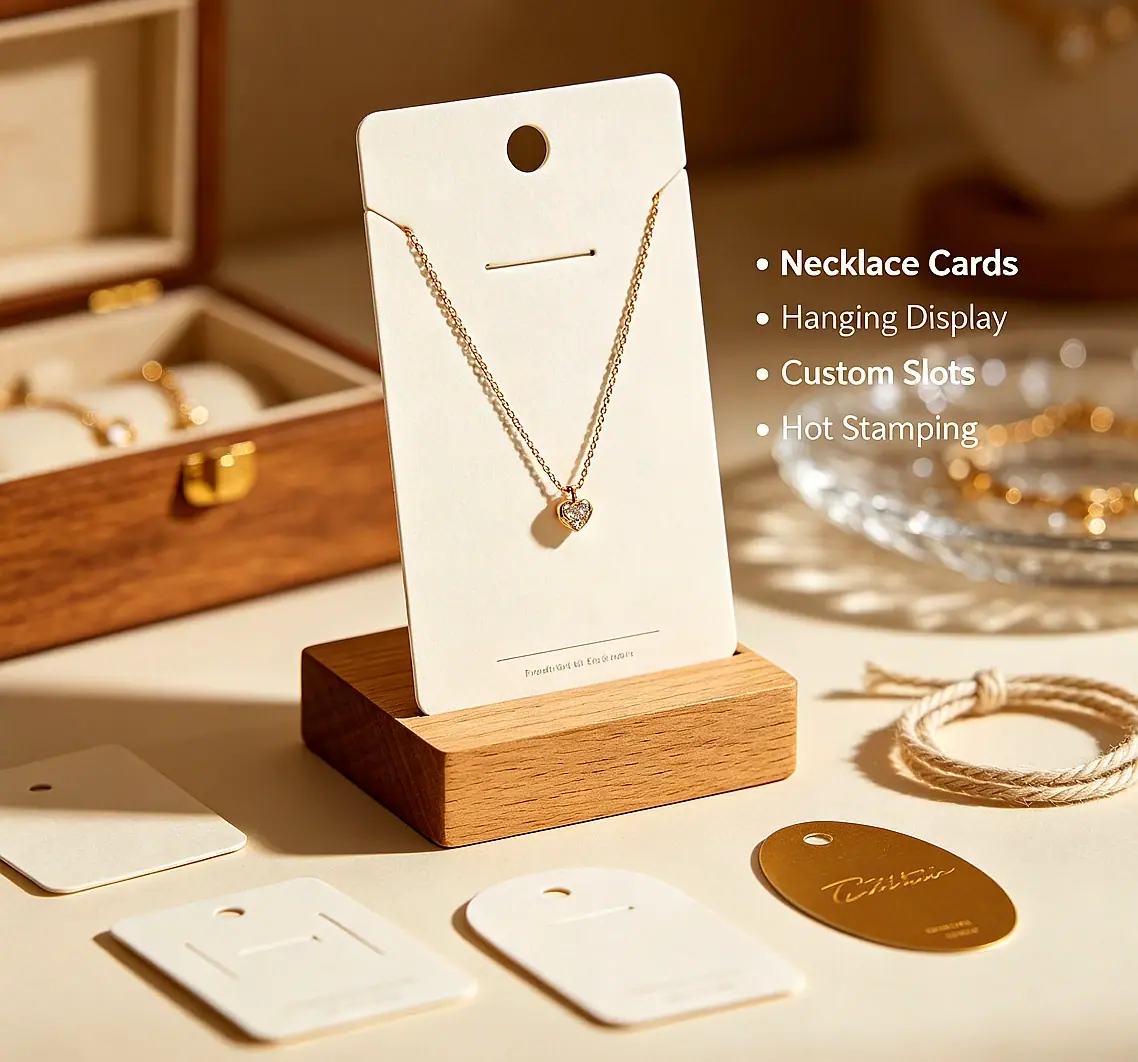
Necklace & Bracelet Cards
Arched and straight drape slots that hold a chain at both ends, sized to your necklace drop so the piece sits flat instead of tangling.
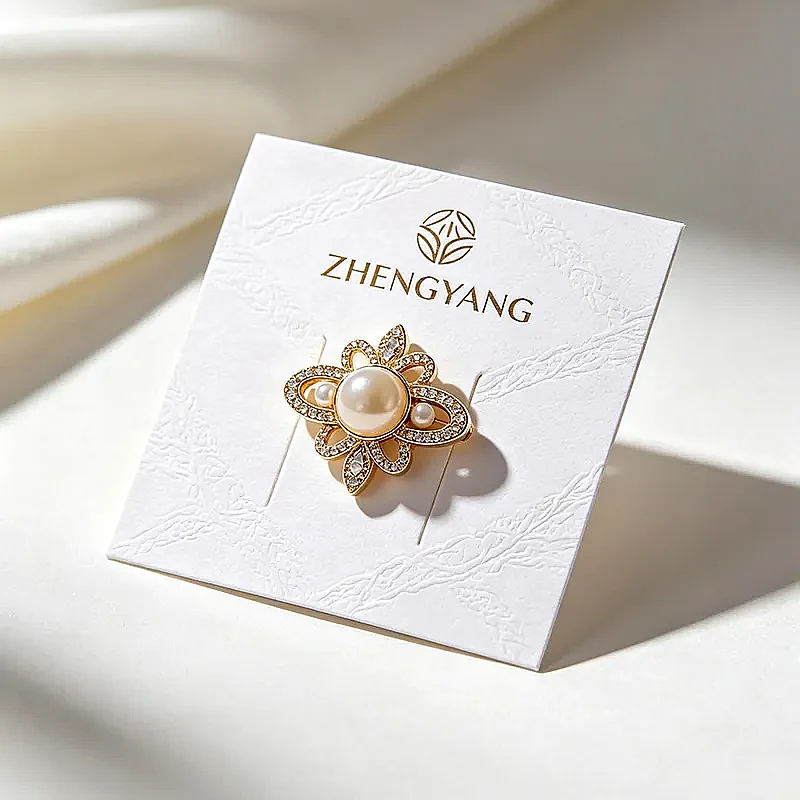
Earring & Stud Cards
Paired holes, keyhole slots and hook cut-outs for studs, hoops and French hooks, with the pair aligned to the same centre line.
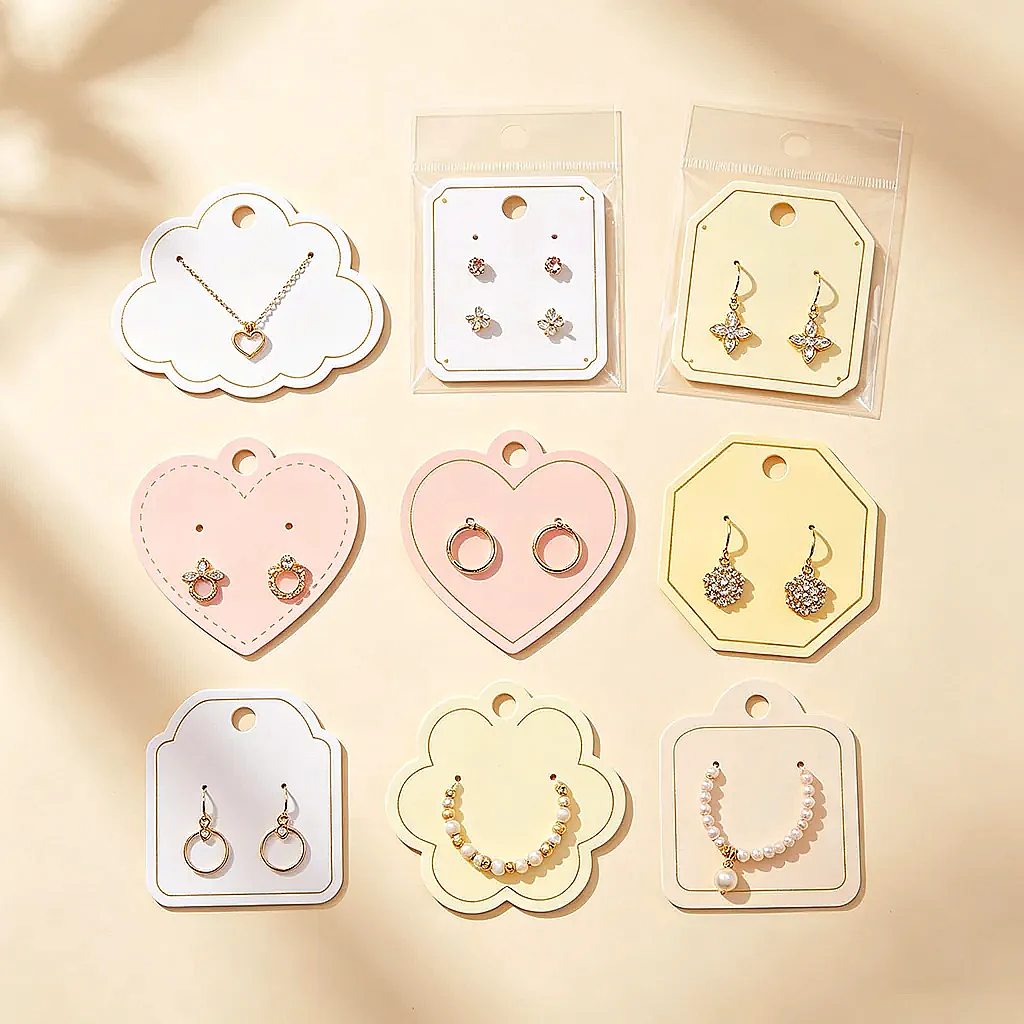
Fold-to-Stand Display Cards
One-piece cards with a fold line and lock tab: stand them at the counter, fold them flat and post them without repacking the jewelry.
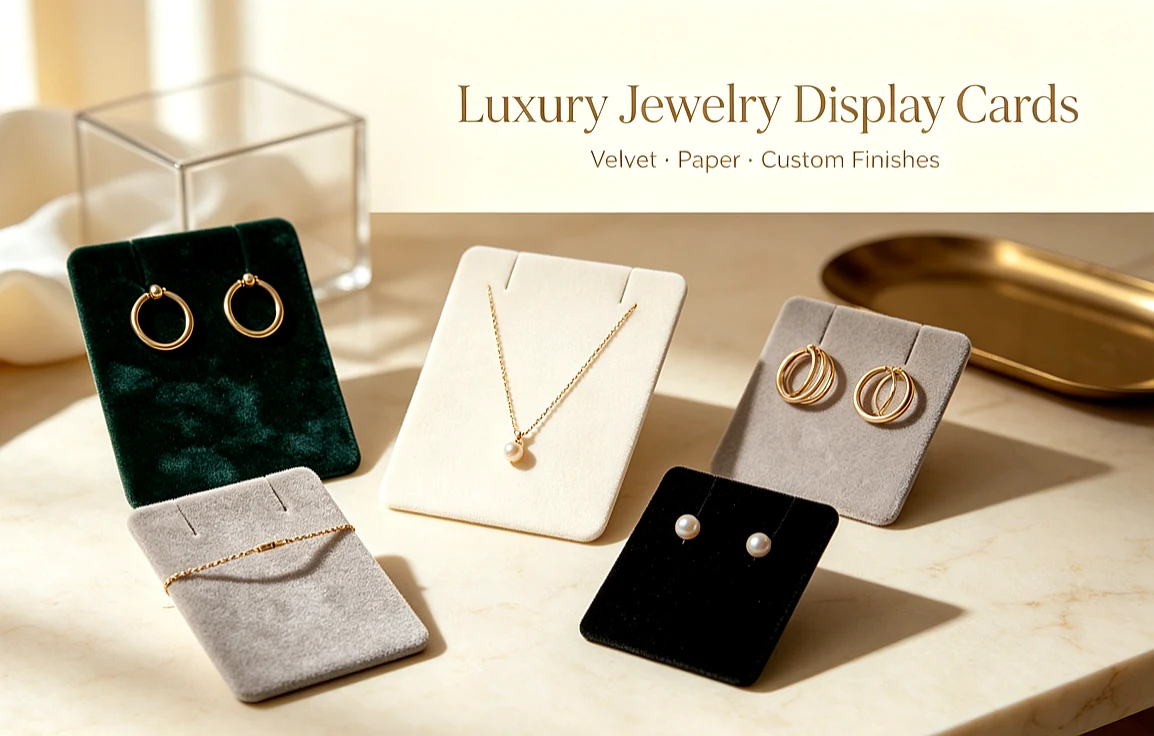
Ring & Positioning Cards
Tuck slots and shaped cut-outs that hold a ring band or a set in a fixed position, so the piece reads the same way in every box.

Velvet & Leather-Finish Cards
Velvet paper or leather-effect stock laminated to the board for premium lines, die-cut through both layers without fraying at the slit.
What Jewelry Buyers Ask Us to Get Right
The Jewelry Must Not Move
Slot width is set to the chain, wire or post diameter, not to a generic die. We cut to ±0.5 mm so a necklace stays put in transit and on the peg.
Colour Has to Match the Box
Cards are printed on the same Heidelberg offset line as your jewelry boxes, with ΔE≤2 batch control, so card and box read as one set under retail light.
Board Stiffness Follows the Load
Earring cards run at 300–350gsm; necklace and bracelet cards go to 350–400gsm because a hanging chain pulls the card forward on the hook.
Retail and Mail in One Design
We add a peg hole and a fold line to the same die so one card serves the store fixture and the e-commerce mailer, avoiding two SKUs.
Cards Ship Flat, Worldwide
Display cards leave the factory flat and banded, so freight is charged on board volume rather than air. We ship FOB, CIF or DDP door-to-door to 30+ countries, and the same die can be re-run later without new tooling.
What a Jewelry Display Card Actually Has to Do
A jewelry display card is a printed paperboard card with die-cut holes, slits or slots that hold a piece of jewelry — an earring pair, a necklace chain, a bracelet or a ring — so it can be shown on a retail fixture and shipped without tangling. It does three jobs on one piece of board: it presents the piece, it fixes it so it cannot tangle or scratch, and it carries the brand. Those three jobs pull in different directions. A slot generous enough for fast assembly will let a chain slide in transit; a slot tight enough to lock the chain needs a die that matches the actual wire diameter. That is why we ask for the jewelry, not just the artwork.
Cards are usually printed CMYK plus Pantone on one side, with the reverse left uncoated or laminated. If the piece hangs against the printed face, we keep heavy ink coverage away from the slot so the board does not crack along the cut.
Board Weight, Slot Shape and Hanging Hardware
Earring cards carry little weight, so 300–350gsm ivory board is enough and keeps the card from bowing on a printed rack. Necklace and bracelet cards hang from a peg with the whole piece pulling down, so we specify 350–400gsm and orient the grain along the hanging direction. Ring cards need a tuck slot wide enough for the band but tight enough that the ring does not rotate on the shelf.
Standard retail peg holes, euro-slot hangers and shelf-ready notches are all cut in the same die pass. If the card is also going into a mailer, we add a fold line and a lock tab rather than creating a second SKU — one die, two uses.
Velvet, Leather and Foil: Getting the Finish Right
Velvet paper and leather-effect stock are laminated to the board before die-cutting, not after. Cutting through a laminated sheet needs a sharper, slower pass, otherwise the pile pulls away from the slit and the edge looks frayed under counter light. We cut these on a separate setup and check the slot edge on the first sheet, not the last.
Hot foil, embossing and spot UV are all available, but they behave differently on textured stock. Foil on velvet reads as a low-contrast, soft-edged mark and is often better replaced by a deboss; on smooth art paper the same foil is crisp. Our prepress team will say which route will actually hold the detail you drew.
Sampling, MOQ and How the Order Runs
Every order starts from a dieline. We size the card around the jewelry, draw the slots, send the dieline for approval, then produce a physical sample on the final board and finish. Standard structures sample in 3–5 working days; velvet lamination, foil or embossed cards take up to 8. Sample cost is $20–50 and is credited to the order.
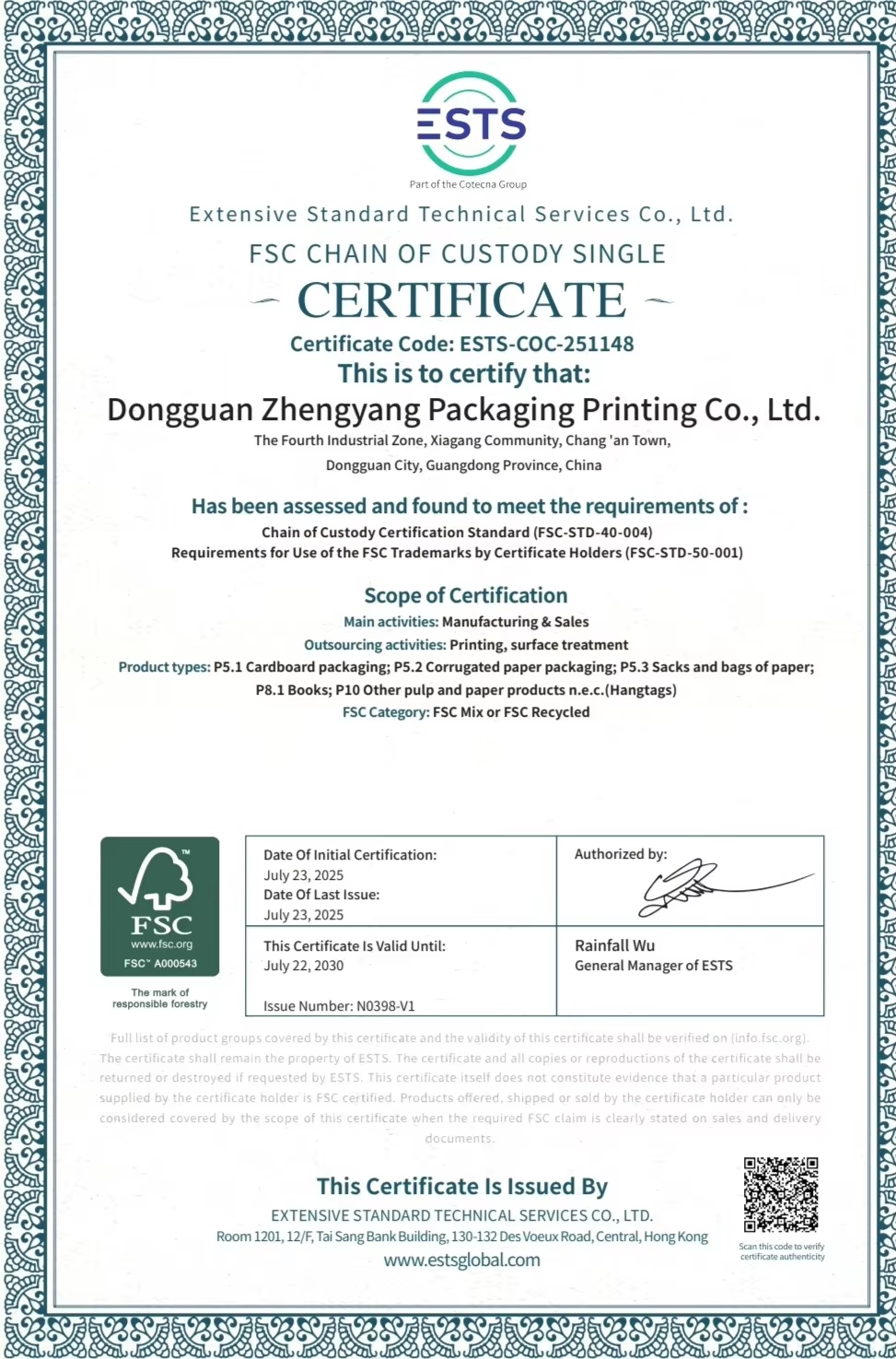
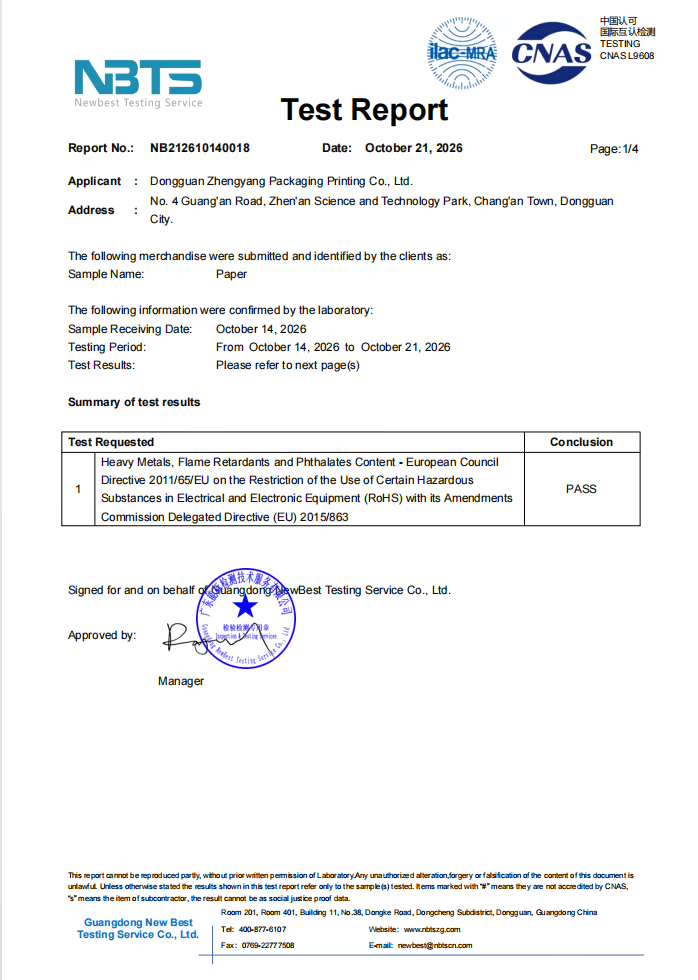
Minimum order is 1,000 pieces per design. Production runs 7–15 working days under IQC/IPQC/FQC inspection, and cards are banded in 50s so the packing line can pick them without counting. Certifications — FSC CoC C018715, Sedex SMETA, RoHS and CE — apply from the first batch.
From Artwork to a Shipped Card
Send the Jewelry and Artwork
Share the piece or its dimensions (chain drop, wire diameter, ring band width) plus AI/PDF artwork. We return a dieline with slot geometry within one working day.
Approve the Dieline
The dieline locks card size, slot position, peg hole and fold line. Nothing is cut before you sign it off.
Physical Sample
A card is produced on the final board and finish — 3–5 working days standard, up to 8 with velvet, foil or embossing.
Produce and Ship
7–15 working days production, IQC/IPQC/FQC inspection, banded flat and shipped FOB, CIF or DDP door-to-door.
Jewelry Display Card Production Standards
| Item | Standard |
|---|---|
| Board | 300–350gsm ivory board for earrings · 350–400gsm for necklace, bracelet and ring cards |
| Lining | Velvet paper or leather-effect stock laminated before die-cutting |
| Minimum order | 1,000 pcs per design and die |
| Sampling | 3–5 working days standard · up to 8 days with velvet, foil or embossing |
| Sample cost | $20–50, credited back on order confirmation |
| Production | 7–15 working days depending on quantity and finishing |
| Colour accuracy | ΔE ≤ 2 per batch against the signed proof |
| Die-cut tolerance | ± 0.5 mm on card size, slot width and peg-hole position |
| Hanging hardware | Standard peg hole, euro slot or shelf notch cut in the same pass |
| Packing | Banded flat in 50s, export cartons |
| Shipping terms | FOB / CIF / DDP door-to-door to 30+ countries |
| Certifications | FSC CoC C018715 · Sedex SMETA · RoHS · CE |
Certified Card Production
Jewelry buyers usually need the paper chain of custody documented before the card goes on a retail shelf. Our FSC CoC licence covers the board we print on, and the Sedex SMETA, RoHS and CE documents are available for your compliance file with the order.
Jewelry Display Cards: Buyer Questions
What is a jewelry display card?
A jewelry display card is a printed paperboard card — typically 300–400gsm, sometimes velvet or leather laminated — with die-cut holes, slits or slots that hold a piece of jewelry so it can be displayed on a retail fixture and shipped without tangling. Earring, necklace, bracelet and ring cards are all the same product family, distinguished by the opening cut into the card.
Do you supply jewelry display cards wholesale or in bulk?
Yes. We are a display card manufacturer working with jewelry brands, retail chains, import distributors and e-commerce sellers. Orders start at 1,000 pcs per design, and volume runs share the same die, so reorders of 10,000 pcs or more carry no new tooling cost.
Can you print our logo on the card?
Yes — CMYK offset plus Pantone spot, with hot foil, deboss or spot UV where the design needs it. Most buyers put the logo and size on the face and care or material notes on the reverse. Send vector artwork and we return a proof on the production board for approval.
Do you make ring cards as well as earring and necklace cards?
Yes. Ring cards use a tuck slot wide enough for the band but tight enough that the ring cannot rotate, and are often paired with velvet or foam lining. They run on the same 350–400gsm board as necklace cards and are cut on the same die programme.
What is the minimum order for custom jewelry display cards?
1,000 pieces per design and die. Because each card needs its own cutting die, the die cost is the fixed part of a small order; sending the jewelry dimensions early lets us design one die that covers a size range instead of several.
Which board weight should I choose?
Earring cards normally run at 300–350gsm ivory board. Necklace, bracelet and ring cards go to 350–400gsm, because a hanging piece pulls the card forward on the peg and lighter board bows over time. Velvet-laminated cards add roughly the thickness of the lining on top of the board.
Can the card hold the jewelry during shipping, not just on display?
Yes, if the slot is cut to the actual chain or post diameter. Tell us where the card is used — retail peg, counter tray or mailer — and we set slot width and board stiffness accordingly, adding a fold line and lock tab where the card doubles as mail packaging.
How is velvet applied, and does it fray at the slots?
Velvet paper is laminated to the board before die-cutting. Cutting a laminated sheet needs a separate, slower pass with a sharp die; we check the slot edge on the first sheet of every run rather than discovering fraying after the batch is packed.
Can I print a logo in foil on a velvet card?
You can, but foil reads as a soft, low-contrast mark on velvet because the texture breaks the reflection. On velvet we usually recommend a deboss or a printed metallic instead, and reserve hot foil for smooth art paper where the edge stays crisp.
How long does a display card order take to ship?
Sampling takes 3–5 working days for standard structures and up to 8 with velvet, foil or embossing. Production runs 7–15 working days, then FOB, CIF or DDP door-to-door shipping — air takes roughly 5–8 days and sea 25–35 days depending on destination.
Send the Jewelry, Get a Card That Fits It
Share the piece dimensions or a photo with a reference size, plus your target quantity. We reply with a dieline, board recommendation and an itemised quote.