
Custom Ring Cards and Positioning Cards for Jewelry Sets
Tuck slots · Bridal and set cards · Velvet or foam backing · 350–400gsm · MOQ 1,000
A ring card is a printed paperboard card with a tuck slot or shaped cut-out that holds a ring by the band, so the stone sits upright on the shelf and the ring cannot rotate in the box. We cut the slot to your band width at ±0.5 mm, add velvet or foam where the ring needs cushioning, and print the card on the same line as the jewelry box.
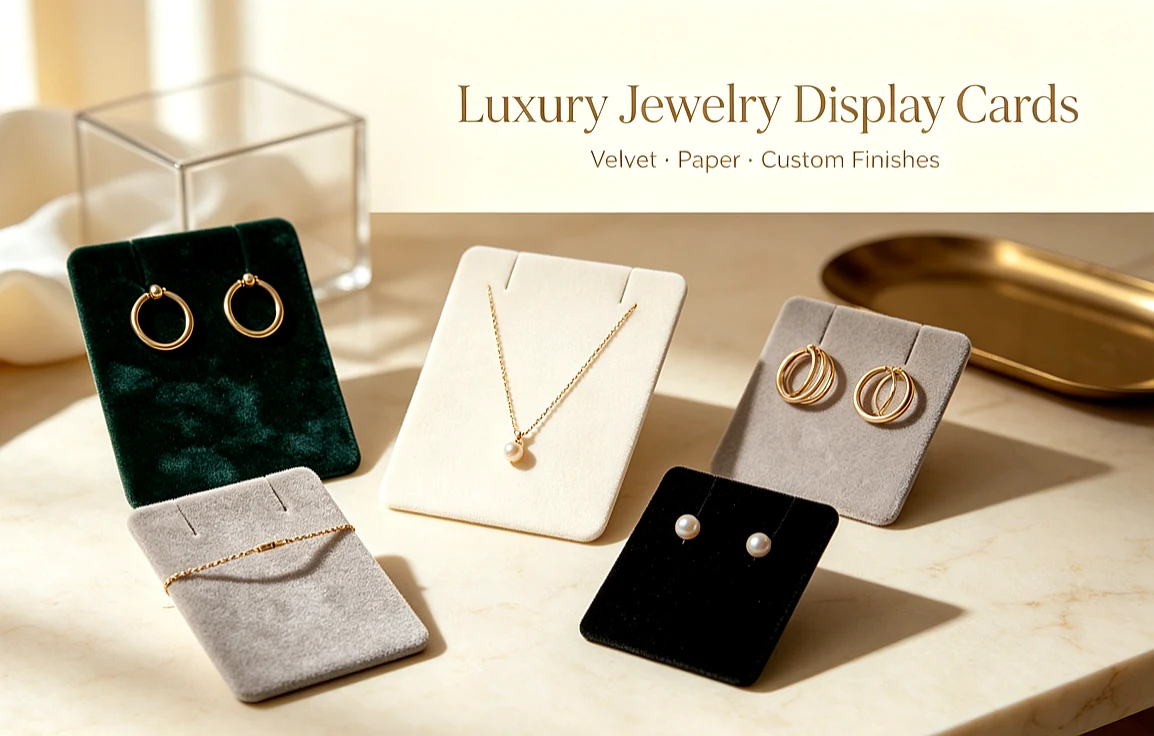
Ring Card Formats We Produce

Single Ring Cards
One tuck slot cut to the band width, with the stone held above the card face so it reads clearly under counter light.
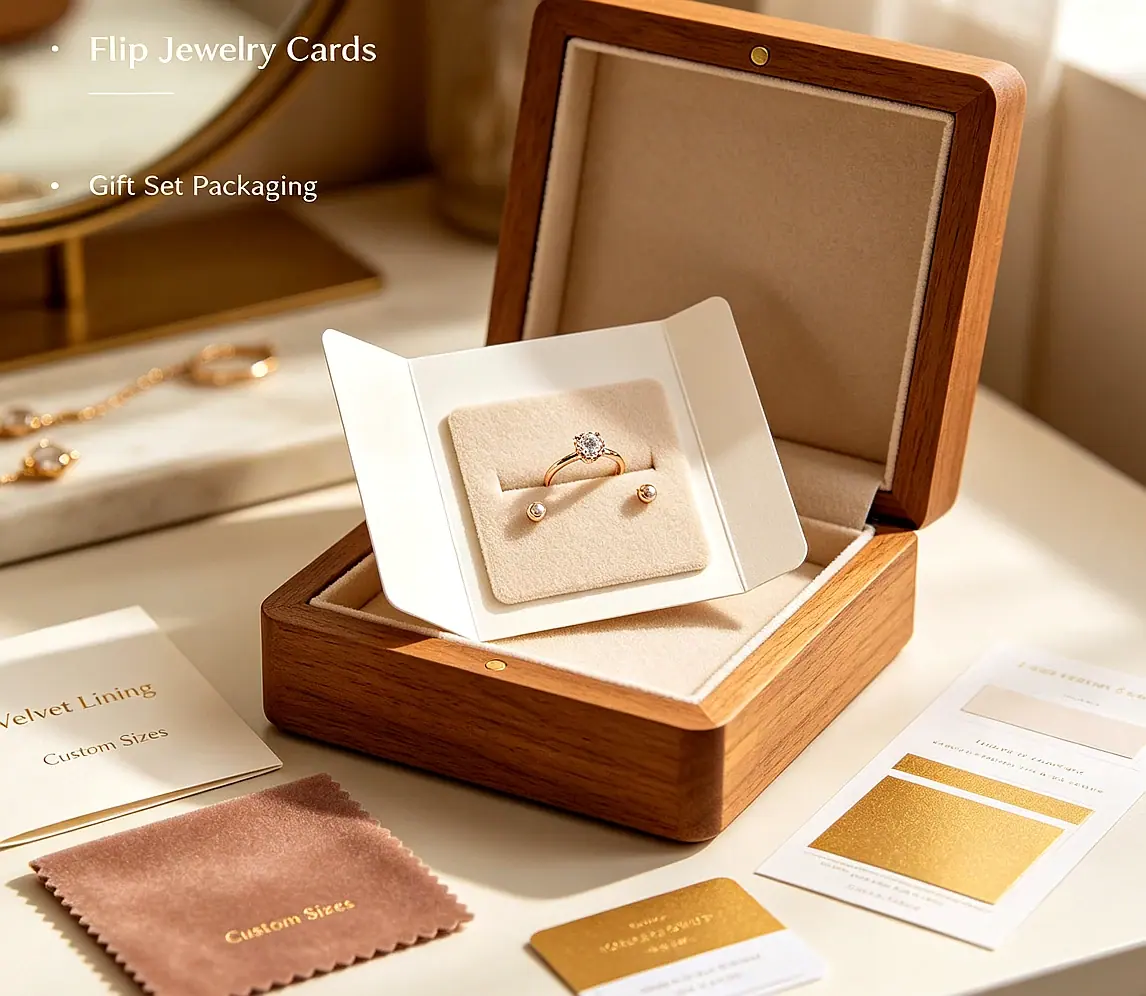
Bridal & Set Cards
Two or three slots on one card so an engagement and wedding band stay aligned as a pair rather than shifting in the box.
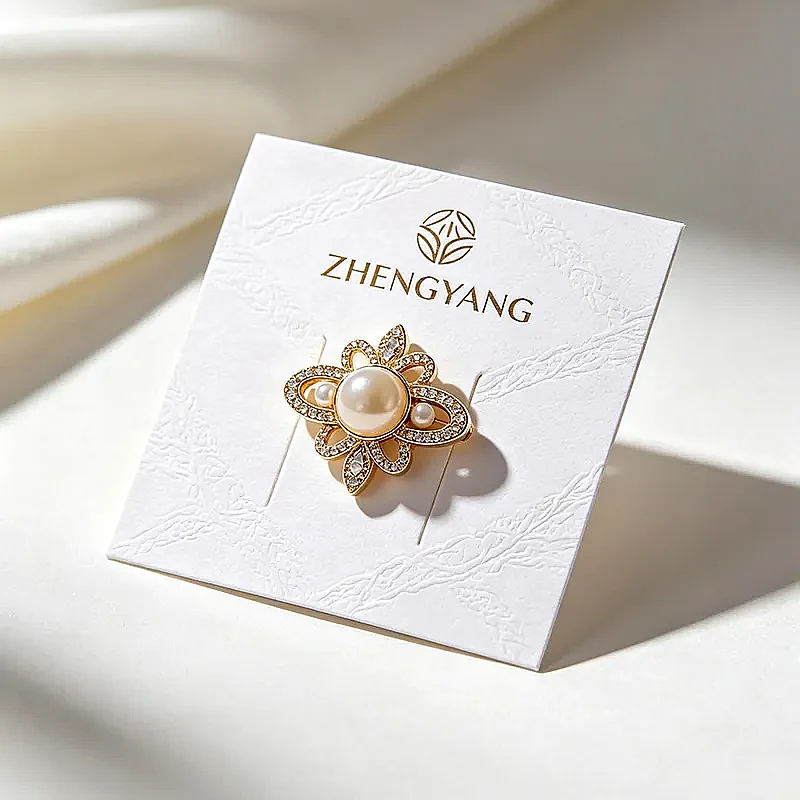
Velvet & Foam-Backed Cards
Velvet paper or foam laminated behind the board to cushion the band and stop metal-on-board marking in transit.
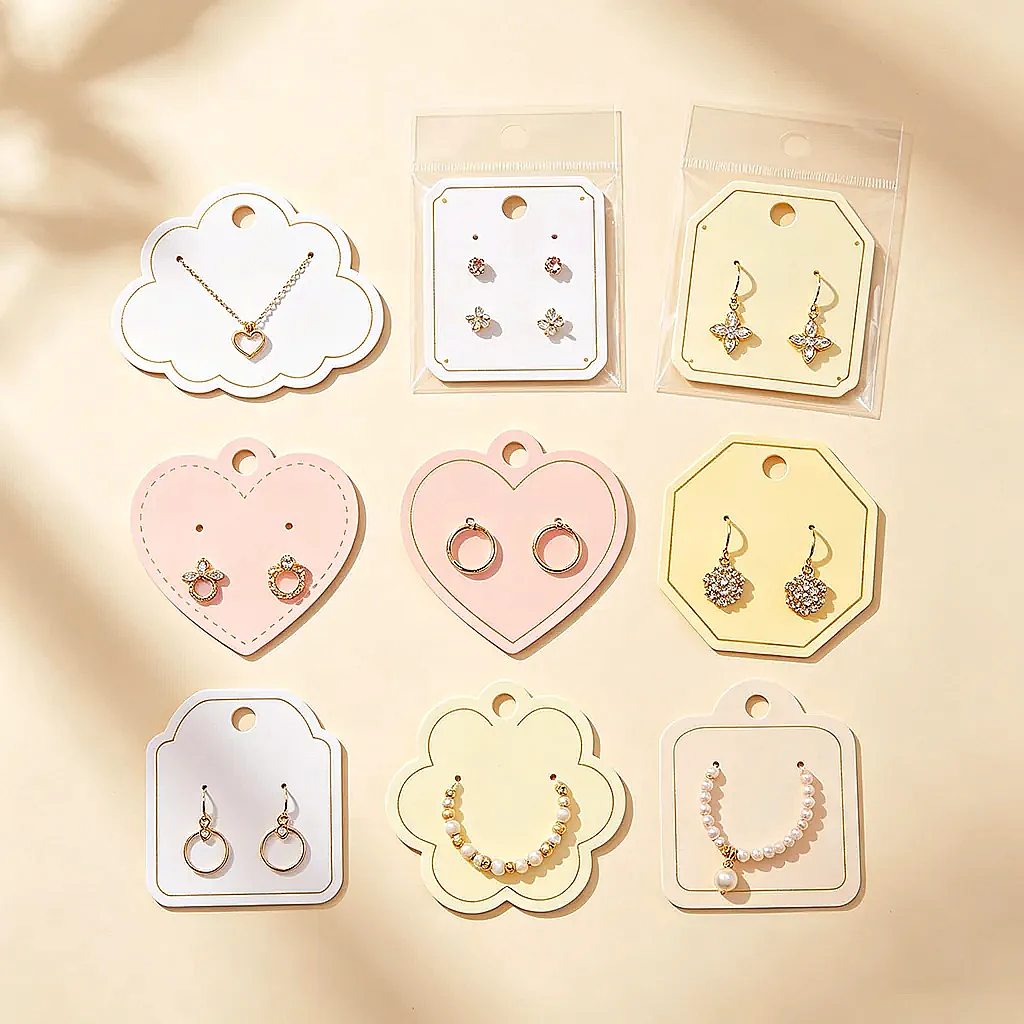
Positioning Cards for Sets
Shaped cut-outs that fix rings, earrings and a pendant in set positions, so every box opens the same way.
What Decides Whether a Ring Card Works
Slot Width Matches the Band
A 1.5 mm band and a 4 mm signet need different slots. We cut to ±0.5 mm so the ring is held, not squeezed or left loose.
The Ring Must Not Rotate
Slot depth and friction are set so the stone faces forward. A slot that is too deep lets the ring turn and the stone hides.
Board and Lining Follow the Weight
Light bands run on 350gsm; heavy signets and sets go to 400gsm with velvet or foam backing so the card does not bow.
Retail Tray and Mailer in One Card
Ring cards often serve the counter tray and the e-commerce parcel. We keep outer dimensions constant so one card fits both.
Ring Cards Shipped Flat
Cards leave the factory flat and banded in 50s, so freight is charged on board volume rather than air. FOB, CIF or DDP door-to-door to 30+ countries, with the die kept for reorders.
What a Ring Card Has to Do
A ring card is a printed paperboard card with a slot that holds a ring by the band, keeping the stone upright for display and fixed in transit. It is the same product family as an earring or necklace card; only the opening changes. The ring card is judged on two things: whether the stone faces the customer, and whether the ring stays in that position after handling.
Both come down to slot geometry. If the slot is wider than the band, the ring leans and the stone turns sideways; if it is narrower, the band will not seat without force and the card creases at the slot ends.
Slot Types: Tuck, Notch and Multi-Ring
Three slot families cover most ring work. A tuck slot — a straight slit with a small relief hole at each end — holds the band without tearing the board. A semi-circular notch supports a wide band or signet from underneath. For bridal sets, two slots on a shared centre line keep the rings at a consistent gap.
Slot depth is chosen so the ring sits on the card face rather than sinking into it. For a solitaire we set the depth so the setting clears the board; for a flat band we bring it forward slightly so the metal catches light.
Velvet, Foam and the Lining Behind the Band
Velvet paper or thin foam is laminated behind the board before die-cutting. The lining does two things: it cushions the band during transit, and it stops metal-on-board marking where the ring touches the card. Because the laminated sheet is thicker, the slot is cut with a sharper die and a slower pass, and we check the edge on the first sheet.
Where a ring is set with a stone that must not touch anything, we cut a recessed window and let the setting sit in it rather than resting on the surface.
Sizing, MOQ and How the Order Runs
Send the band width, ring diameter and stone height — a photo with a ruler is enough to start. We return a dieline with slot position and depth, then sample on the final board and lining. Standard structures sample in 3–5 working days; velvet, foam or foil take up to 8.
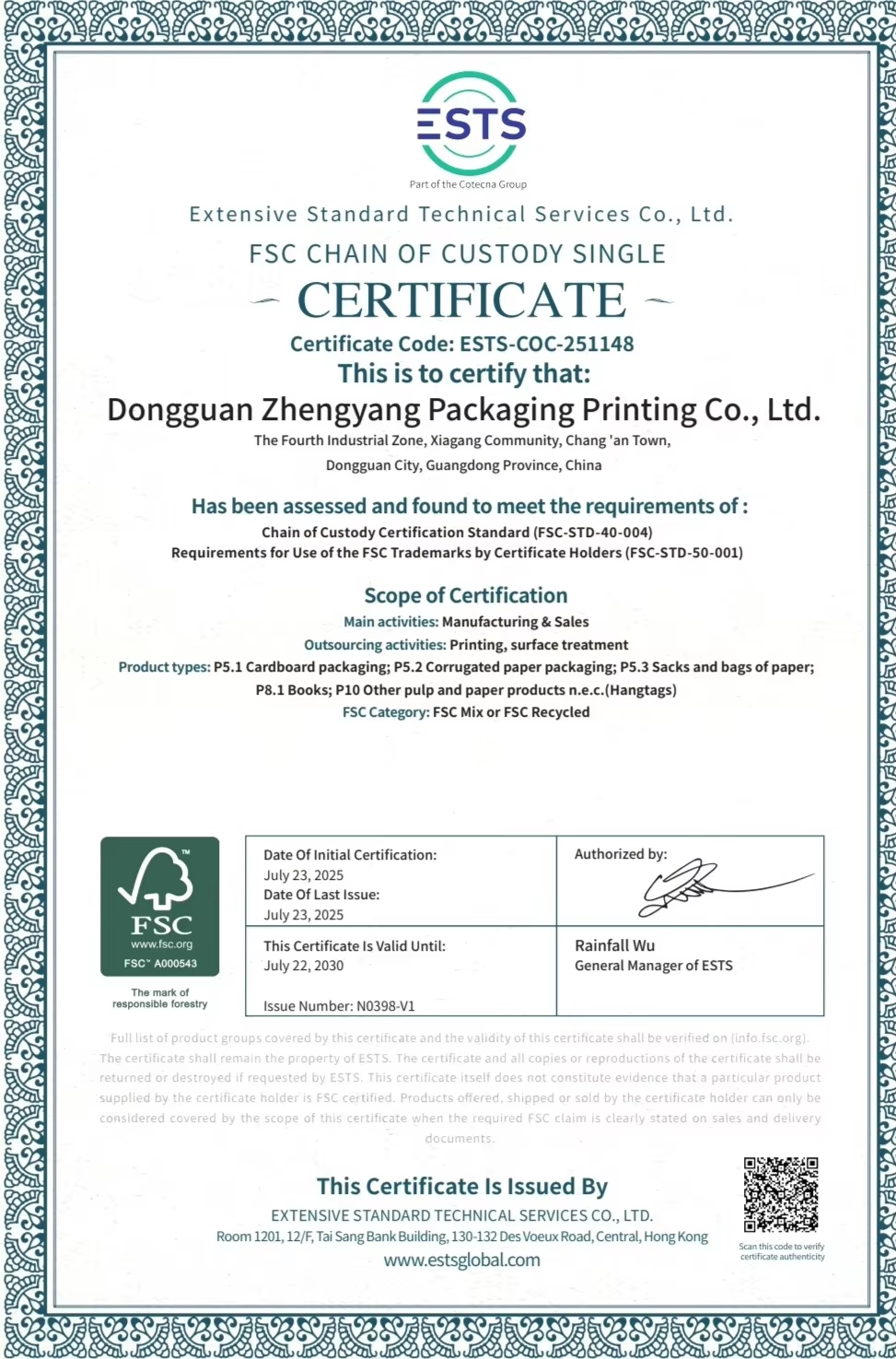
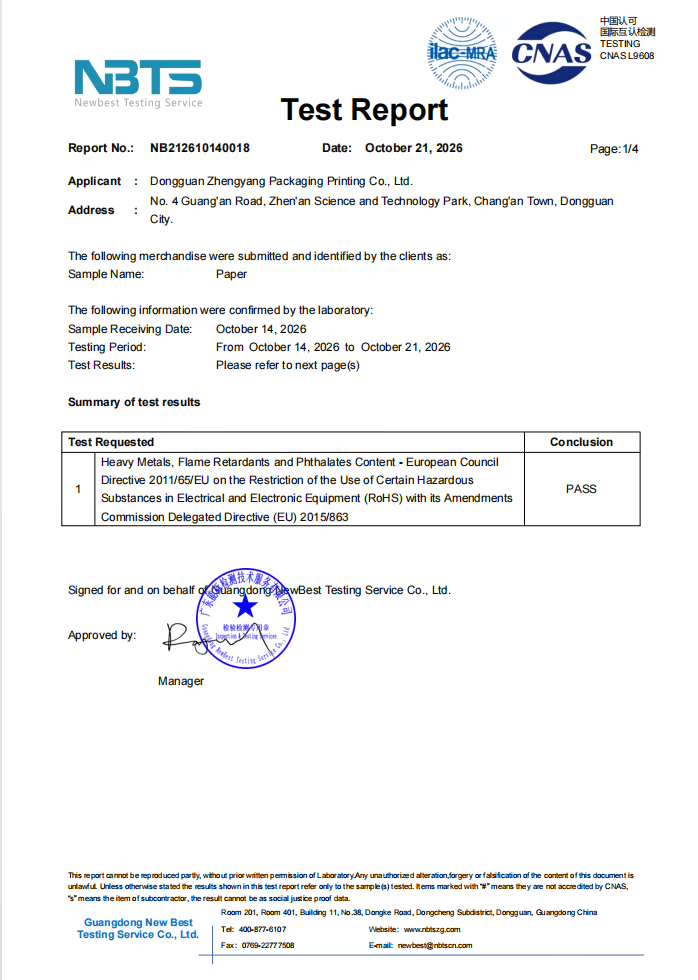
Minimum order is 1,000 pieces per design. Cards are banded flat in 50s and packed in export cartons, with no fixed carton quantity quoted until the order is confirmed. FSC CoC C018715, Sedex SMETA, RoHS and CE documentation ships with the batch.
From Band Width to a Shipped Card
Send Ring Dimensions
Band width, ring outer diameter and stone height, plus target quantity and whether the card also has to hold earrings or a pendant.
Approve the Dieline
We send slot position, depth and card size. Nothing is cut until you approve the layout.
Sample With the Ring
3–5 working days on the production board; up to 8 with velvet, foam or foil. The sample is fitted with your ring.
Produce and Ship
7–15 working days under IQC/IPQC/FQC inspection, banded flat and shipped FOB, CIF or DDP.
Ring Card Production Standards
| Item | Standard |
|---|---|
| Board | 350gsm for light bands · 400gsm for signets and multi-ring sets |
| Slot | Tuck slit, semi-circular notch or multi-slot layout, cut to band width |
| Lining | Velvet paper or thin foam laminated before die-cutting |
| Minimum order | 1,000 pcs per design and die |
| Sampling | 3–5 working days · up to 8 with velvet, foam or foil |
| Sample cost | $20–50, credited back on order confirmation |
| Production | 7–15 working days depending on quantity and finishing |
| Colour accuracy | ΔE ≤ 2 per batch against the signed proof |
| Die-cut tolerance | ± 0.5 mm on slot width, slot depth and ring position |
| Packing | Banded flat in 50s, export cartons |
| Shipping terms | FOB / CIF / DDP door-to-door to 30+ countries |
| Certifications | FSC CoC C018715 · Sedex SMETA · RoHS · CE |
Certified Card Production
Ring cards sit inside the box a customer keeps, so the paper claim has to be documented. FSC CoC C018715 covers the board, and Sedex SMETA, RoHS and CE records are supplied with the order.
Ring Card Questions from Buyers
What is a ring card?
A ring card is a printed paperboard card, usually 350–400gsm, with a tuck slot or notch that holds a ring by the band so the stone faces forward on display and stays fixed in the box. It belongs to the same family as necklace and earring cards — only the opening differs.
Can you make cards for engagement and wedding ring sets?
Yes. Two or three slots on a shared centre line keep a bridal set aligned at a consistent gap, so every box opens the same way. We set slot depth per ring so both stones sit at the same height.
What is a positioning card for jewelry sets?
A positioning card fixes several pieces — a ring, a pair of earrings, a pendant — in set positions so the box reads correctly on opening. Openings are cut per piece, and the layout is confirmed on a sample with your actual jewelry.
Do you supply ring cards wholesale?
Yes. We manufacture for jewelry brands, retail chains, import distributors and e-commerce sellers from 1,000 pcs per design. Reorders reuse the same die, so scaling up adds no new tooling cost.
How do you stop the ring rotating on the card?
Slot width is cut to the actual band at ±0.5 mm and depth is set so the band seats fully. A slot that is too deep lets the ring turn and the stone hides; too narrow and the band will not seat without creasing the card.
What are the lead times?
Sampling takes 3–5 working days, up to 8 with velvet, foam or foil. Production runs 7–15 working days, followed by FOB, CIF or DDP shipping.
Send the Ring, Get a Card That Holds It
Share the band width, ring diameter and stone height, plus your quantity. We reply with a dieline, board and lining recommendation and an itemised quote.